
What Happened: Optimizely Compromise Delivers Malicious Code to Major Websites
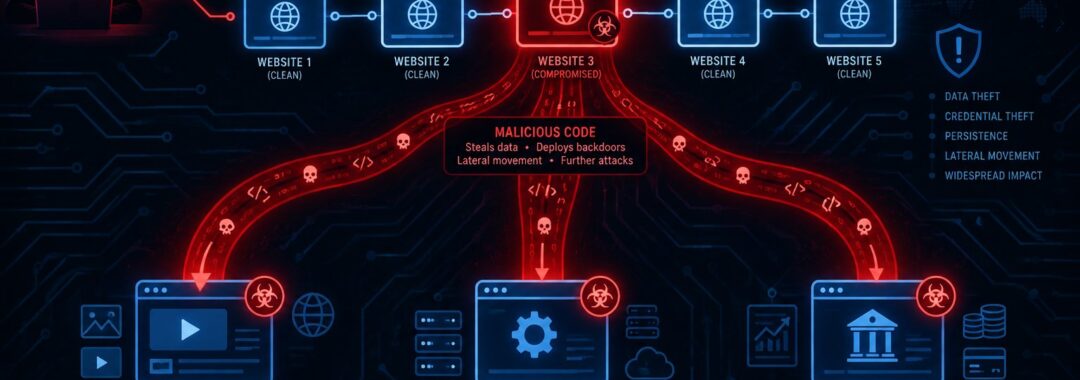
A significant supply chain attack has compromised visitors to some of the world’s largest websites after an attacker exploited a vulnerability in Optimizely Web Experimentation. According to the report, the attack delivered card skimming code and iOS exploit kits to visitors of at least 178 organisations, including CNN, the BBC, Zoom, Salesforce, GitLab, IKEA, HSBC, and Equifax.
The incident, which some researchers have dubbed OPTIMJACK, was first detected at 04:21 UTC on November 16, 2026, when malicious code appeared in the BBC’s snippet. Optimizely confirmed the breach in an incident notice posted at 01:02 UTC on November 17, stating that an attacker had “exploited a vulnerability in Experimentation” to add malicious JavaScript to customer projects.
According to Report URI, which monitors scripts run by websites, the malicious code was designed to replace cryptocurrency wallet addresses with the attacker’s own addresses and capture card details. The vendor states it has fixed the flaw and removed the code, though the incident notice does not explain how the vulnerability worked or how many projects were affected.
Source: The Hacker News – Hijacked Optimizely Scripts Served Card Skimmer and iOS Exploit Kits
How Does This Supply Chain Attack Work?
The attack exploited how Optimizely delivers code to customer websites. Sites using the service load a script called a snippet from the vendor, which updates whenever customers change settings. Each snippet runs a field of custom code called Project JavaScript.
According to Report URI’s technical analysis, the attacker wrote a loader into the Project JavaScript of customer projects while leaving the rest of each snippet untouched. The snippets continued to be served from cdn.optimizely.com with Optimizely’s own certificate, meaning every page loading a compromised snippet also ran the malicious loader.
The loader appeared in three versions:
- Most snippets loaded malicious code from 1688360[.]cc/track.js directly
- One version hid the address in base64 encoding to evade text searches
- Another carried a full copy of the payload to run if the domain was blocked
Even sites serving the snippet from their own domain were affected, as the content originated from the same compromised project. Smartsheet’s script was reportedly cleaned once and then re-infected with a hidden version, indicating the attacker still had access at that point.
Technical Analysis: Payloads and Capabilities
Cryptocurrency Address Swapping
The primary payload, a file called track.js, replaces valid cryptocurrency wallet addresses with the attacker’s addresses across page text, forms, links, the clipboard, and outgoing requests. According to StepSecurity’s payload analysis, it only swaps addresses that pass their chain’s checksum and appear near payment-related words such as “wallet,” “deposit,” or “send.”
The report confirms that cryptocurrency has already been stolen through this method. Even copying an address from an affected page may result in the attacker’s address being pasted into a wallet.
Card Skimmer
A card skimmer was added to the payload at 13:43 UTC, capturing card numbers, expiry dates, and CVVs when submitted through site form fields. According to the report, the skimmer sends this data to the attacker’s server but cannot read cards entered in cross-origin payment iframes, such as Stripe’s hosted fields or Adyen’s.
iOS Exploit Kits
On iPhones and iPads, the code loaded additional scripts from .icu domains designed to deliver exploit chains:
- Coruna exploit kit: targets iOS 13.0 to 17.2.1
- DarkSword exploit kit: targets iOS 18.4 to 18.7
- A separate chain for iOS 26 that reportedly only collects device details
Cynet’s researchers retrieved the second stage using an emulated iPhone browser and describe what they observed as conditional delivery, noting it was “not a successful compromise of a physical iPhone or iPad.” The kit’s comments mark iOS 18.7.3 and later, and iOS 26.3 and later, as patched.
Business Impact: Which Organisations Were Affected?
Report URI checked 1,611 Optimizely snippets and found malicious code in 188 of them, belonging to 178 organisations. The firm states the real number is likely higher because it could only check snippets found in time.
Affected organisations include:
- CNN, BBC, and Peacock (media)
- Zoom (communications)
- Salesforce and GitLab (technology)
- IKEA (retail)
- HSBC and Equifax (financial services)
- Air France-KLM (aviation)
- Ledger (cryptocurrency hardware)
- TalkTalk (telecommunications)
Notably, Optimizely’s own main site and login page also carried the malicious code. A mass cleanup began at approximately 20:40 UTC, and by 21:52 UTC only TalkTalk’s snippet still contained the code.
The report indicates the first injection loaded from webshell[.]lol, which had previously been planted through Kissmetrics, StorifyMe, and Minute Media scripts since late the previous week, with its first appearance on Turkish sites on September 17.
What This Means for Australian Organisations
Note: This section provides general guidance for Australian businesses; the source material does not specifically identify Australian victims.
This incident highlights the critical importance of third-party risk management and supply chain security for Australian organisations:
- Organisations using third-party A/B testing or experimentation platforms should review their exposure and monitor for indicators of compromise
- The ACSC Essential Eight recommends application control and restricting administrative privileges—controls that can limit the impact of compromised third-party scripts
- Under the Notifiable Data Breaches scheme, organisations that suspect card data or personal information was exposed through this attack may have reporting obligations under the Privacy Act
- A cyber security maturity assessment can help identify gaps in supply chain security and third-party risk management
Actionable Recommendations
Organisations concerned about supply chain attacks should take the following steps:
- Audit third-party scripts: Review all external JavaScript loaded on your websites, including analytics and experimentation tools
- Implement Content Security Policy (CSP): Use strict CSP headers to control which scripts can execute on your pages
- Monitor for indicators of compromise: Check for connections to the domains mentioned in the report (1688360[.]cc and webshell[.]lol)
- Update iOS devices: Ensure all corporate mobile devices run iOS 18.7.3 or later, or iOS 26.3 or later, which are marked as patched against these exploit kits
- Review payment flows: Verify that card payment forms use cross-origin iframes where possible
Consider engaging managed security services to monitor for threats in real-time and respond to supply chain compromises quickly.
Frequently Asked Questions
What is a supply chain attack?
A supply chain attack compromises a trusted third-party service or software to reach the ultimate target. In this case, the attacker exploited Optimizely’s platform to deliver malicious code to visitors of websites using the service, without directly compromising those websites’ own systems.
How can I protect my business from third-party script attacks?
Implement Content Security Policy headers, regularly audit third-party scripts on your websites, use Subresource Integrity (SRI) where possible, and consider vulnerability management services to identify and remediate security gaps in your web applications.
Were any visitors’ devices actually compromised by the iOS exploits?
According to Cynet’s researchers, what they observed was conditional delivery of the exploit kits, described as “not a successful compromise of a physical iPhone or iPad.” The report does not confirm any successful device takeovers.
Key Takeaways
- An attacker exploited an Optimizely vulnerability to inject malicious code into snippets loaded by at least 178 organisations
- The code included a card skimmer, cryptocurrency address swapper, and iOS exploit kits
- Major brands including CNN, BBC, Zoom, HSBC, and Salesforce were affected
- Optimizely states the flaw has been fixed and malicious code removed
- The report confirms cryptocurrency has already been stolen through the attack
- This supply chain attack demonstrates the risks of relying on third-party scripts
Conclusion
This supply chain attack serves as a stark reminder that even trusted third-party services can become vectors for malicious code. Organisations must treat third-party script security as a critical priority, implementing monitoring and controls to detect and prevent similar compromises.
If your organisation needs help assessing your exposure to supply chain risks or improving your security posture, speak with the OziTechs security team today.