
What Is the North Korean Crypto Theft Campaign ‘FaceStealer’?
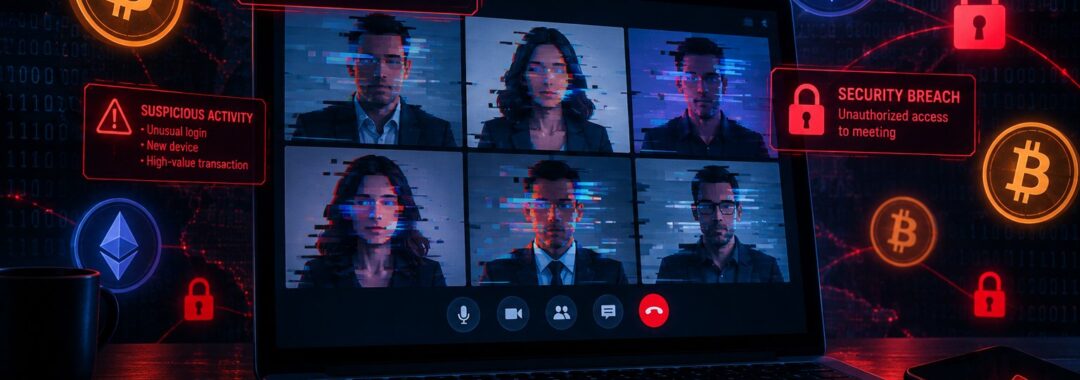
A major North Korean crypto theft operation has been dismantled by U.S. authorities after hackers stole more than $400 million in cryptocurrency using sophisticated social engineering tactics. The campaign, dubbed ‘FaceStealer’, ran for 18 months before the U.S. government seized its cloud-based infrastructure, according to recent reports.
This operation represents one of the most elaborate state-sponsored cryptocurrency heists uncovered to date, combining deepfake technology, compromised video calls, and supply chain attacks to target individuals across the cryptocurrency, Web3, and open-source development communities.
Original reporting by BleepingComputer: US disrupts North Korean campaign behind $400 million crypto theft
What Happened in the FaceStealer Attack?
The U.S. government disrupted the North Korean social engineering campaign after identifying its devastating impact across multiple sectors. According to the FBI, authorities discovered more than 900 webcam videos that hackers had secretly recorded of tech workers deceived by the operation.
The attackers hijacked accounts on major platforms including Telegram, LinkedIn, Slack, and Discord, using them to invite victims to video meetings under various pretenses. ArticWolf researchers attributed the campaign to the BlueNoroff hacker group, identifying 677 targets across 58 countries with a heavy focus on company founders and senior executives.
In a related development, the U.S. Justice Department announced that together with private sector companies, the government froze more than $2.7 billion from the 6.4 billion Binance crypto heist, with court authorisation obtained to seize or restrain in excess of $1.2 billion of that amount.
How Does This North Korean Crypto Theft Attack Work?
The FaceStealer campaign employed a multi-stage attack methodology that exploited human trust and technical deception:
Stage 1: Initial Contact and Reconnaissance
- Attackers compromised legitimate accounts on professional and communication platforms
- Victims received invitations to video meetings from seemingly trusted sources
- Hackers sometimes delayed targeting individuals for months or over a year after initial compromise, waiting for cryptocurrency holdings to grow
Stage 2: Deepfake Video Manipulation
- During video calls, attackers displayed recorded footage of people the targets knew
- These recordings came from previous victims who had fallen for the same scheme
- Meetings sometimes featured recordings of multiple familiar individuals to pressure current victims
- While targets waited for meetings to start, hackers secretly recorded new videos for future attacks
Stage 3: Malware Deployment via ClickFix
- Attackers claimed technical issues and displayed fake error messages
- Victims were prompted to follow links offering fake “fixes” such as updates or installers
- Additional lures included financial documents, fake PDF viewer updates, identity verification prompts, and security audits
Stage 4: Data Exfiltration
The deployed malware harvested crypto data and credentials for video meeting platforms including Zoom, Google Meet, and Microsoft Teams. It also provided access to victims’ contact lists, social media accounts, communication apps, and webcam videos—fuelling further attacks.
Supply Chain Attacks Target Open-Source Developers
The FBI bulletin highlighted a significant incident where hackers compromised the maintainer of a popular open-source JavaScript library with tens of millions of weekly downloads. The developer was lured into a fake Teams meeting with multiple participants, including someone familiar to them.
Although this particular attack was thwarted thanks to quick detection, the FBI confirmed multiple other attempts against developers in the npm and Rust crate ecosystems. Amazon threat analysts also attributed several open-source software supply chain attacks to BlueNoroff in a July 2026 report.
Huntress cybersecurity company previously attributed a similar campaign to BlueNoroff in 2025, where attackers used Zoom calls to infect company executives with custom macOS malware.
If your organisation relies on open-source dependencies, consider engaging vulnerability management services to assess your exposure to supply chain risks.
Actionable Recommendations to Protect Against Similar Attacks
Based on the FBI’s guidance and security best practices, organisations and individuals should implement the following protective measures:
- Join meetings only through official apps using legitimate invite codes—never through links in unsolicited messages
- Verify unexpected invitations independently by contacting the purported sender through a separate, trusted channel
- Keep your webcam off unless explicitly needed for the meeting
- Never run scripts offered as fixes to technical problems during video calls
- Implement multi-factor authentication on all cryptocurrency wallets and exchange accounts
- Train staff to recognise social engineering tactics, particularly those involving urgency or technical issues
For comprehensive protection against state-sponsored threats, speak with our security team about developing a tailored defence strategy.
Frequently Asked Questions
What is the BlueNoroff hacker group?
BlueNoroff is a North Korean threat actor group attributed to the FaceStealer campaign by ArticWolf researchers. The group has been linked to multiple cryptocurrency thefts and supply chain attacks targeting company founders, senior executives, and open-source software developers across 58 countries.
How can I protect my business from North Korean crypto theft?
Protect your organisation by verifying meeting invitations through trusted channels, joining video calls only through official applications, keeping webcams disabled when not essential, and never executing scripts or “fixes” offered during technical issues. Additionally, implement robust security awareness training focused on social engineering tactics.
What platforms were compromised in the FaceStealer campaign?
According to the FBI, attackers hijacked accounts on Telegram, LinkedIn, Slack, and Discord to initiate contact with victims. The malware deployed during attacks also targeted credentials for Zoom, Google Meet, and Microsoft Teams.
Key Takeaways
- The FaceStealer campaign stole over $400 million in cryptocurrency over 18 months
- BlueNoroff, a North Korean threat group, targeted 677 individuals across 58 countries
- Attackers used deepfakes, compromised accounts, and fake technical issues to deploy malware
- Open-source developers and software supply chains were specifically targeted
- Authorities have frozen $2.7 billion related to cryptocurrency theft operations
- Prevention requires verification of meeting invitations and rejection of unsolicited technical “fixes”
Conclusion
This North Korean crypto theft campaign demonstrates the increasing sophistication of state-sponsored cyber operations targeting the cryptocurrency sector. The combination of deepfake technology, social engineering, and supply chain attacks represents a significant evolution in threat actor capabilities that organisations must prepare for.
Australian businesses operating in cryptocurrency, Web3, or open-source development should treat this as a warning to strengthen their security posture. The FaceStealer campaign’s 18-month run before disruption highlights how patient and methodical these attackers can be—sometimes waiting over a year before exploiting compromised victims.